Let’s be honest: all of us audiovisual translators and adapters love to brag in polite company or on LinkedIn. I mean, it feels great to say you’ve worked on award-winning projects. I personally subtitled Joel Coen’s The Tragedy of Macbeth, and yes, I brag about it all the time.
But, actually, we’re back to the usual story. We don’t work for Art with a capital A, we work for the Mortgage. There are times when we need to put our metaphysical Emmys aside and get over our snobbery. I’ve also translated and subtitled Netflix series that were firmly ranked among the “top 10 worst of all time.” (Stream it or skip it?) Fine: sometimes you go down in history, and other times you just collect a paycheck.
Let’s talk about those projects that sit right in the middle: technically… questionable products, but with mind-boggling numbers.
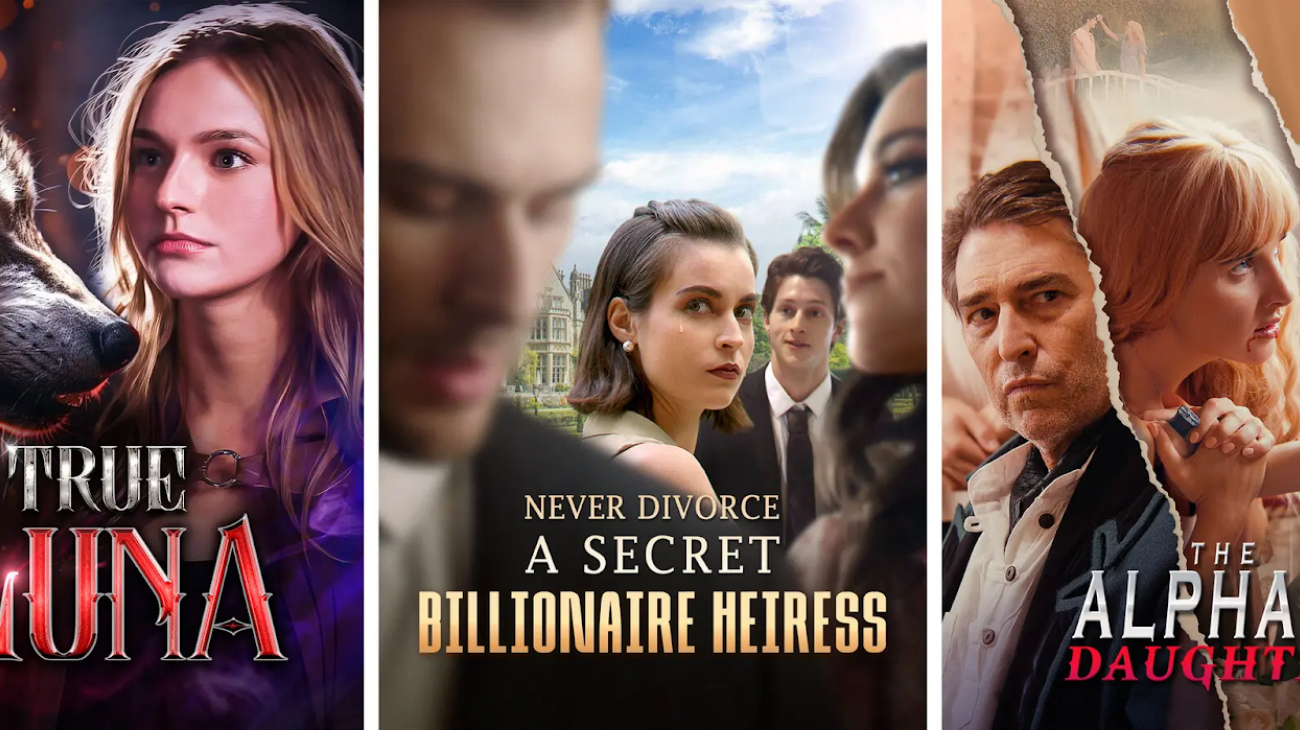
I got commissioned to localize an AI-generated animated series from English into Italian. A show created for platforms I’d never even heard of and that I had to discover, learn, and master within a single deadline, that has racked up an astonishing 225 million views. The target audience? Young adults. The genre? A “modest erotic” fantasy romance. (I think there’s a lot to unpack about this niche of creativity and its themes, but I’ll save that for another post).
I’m checking the video files and I’m seeing a style of editing and scenes that I’ve truly never seen before. And yet, I’ve translated a few tens of thousands of hours of video and seen at least five times as many.
-
The “Moving Photonovela” Effect: Near-static 3D models, scene changes that follow no logic, and text that often has nothing to do with what’s happening on screen. The latter being quite a problem in AV translation.
-
The Catch-All Narrator: A single, monotonous AI voice reading the source book verbatim—reciting prose, character dialogue, inner monologues. Little to no variation in tone. Yet, 225 million plays.
I immediately ruled out the idea of using ‘standard’ subtitling guidelines (which I often have a lot to say about) on something like this, the result would have been an unreadable chaos. Viewers will find their screens smothered in massive blocks of text at 25 characters per second while desperately trying to figure out who is actually speaking. Sit and think.
When original film direction doesn’t exist, the subtitler has to become the director. You have to think outside the box and deploy a true guerrilla localization strategy.
Primary Goal: Saving the User Experience
1. Goodbye Verbatim, Hello Readability
If the narrator reads: “He stared at her with burning desire, his eyes wide with shock as he stepped closer,” but on screen you just see two 3D avatars standing three feet apart, cut the prose. Condense it, turn the descriptive fluff into snappy cinematic dialogue, and give young viewers the right pacing to enjoy the romantic tension without forcing them to read a short essay every frame. Something you simply cannot do on “regular” TV shows, unless you want a lesson on faithfulness to the original and a Fail in a QC.
2. Create Visual Hierarchy Out of Chaos
With a single AI voice reading both narration and dialogue, viewers easily get lost. I used formatting strategically: italics for inner monologues, clear hyphens for dialogue, and ditched redundant tags like “he said / she yelled”. Managed to put some character direction in it.
3. Pacing Follows the Edit, Not the Robot
The synthetic voice was going like a train, with regular pauses that almost never matched the shot changes. So I decided to give the subtitles the same steady rhythm, even cutting the CPS down to an average of 15. The result is that instead of causing rereads, this low reading speed gives plenty of room to watch the scenes in the gaps between the subtitles.
The AI Asset Survival Guide for Subtitlers
-
🎯 Know Your Target: Young adults on smartphones want fluid, engaging text. If a subtitle requires 4 seconds of reading time on a 2-second cut, trim it. No mercy.
-
✂️ Kill Redundancy: Let the visual do the work (when it actually works!) and trim, trim, trim. A lot of descriptions are redundant and just filler; they’d just eat up the audience’s attention budget. If you want to read hyper-detailed descriptions, you can read The Portrait of Dorian Gray or Jane Eyre.
-
🧠 Be the Human Filter: AI doesn’t understand subtext, irony, or emotional weight. That’s your job—injecting natural, punchy, localized flavor.
The Takeaway
Artificial Intelligence can generate hundreds of hours of video in minutes and pull in hundreds of millions of views; we can’t ignore it. We can’t put up the shield of ‘oh well, humans didn’t make it, how gross!‘; we have to be curious and respect a slice of the market—which I call a niche, but it’s not that much of a niche—worth 225 million views. After all, unwatchable TV shows written, directed, and acted by humans exist too.
Working on these assets isn’t a compromise—it’s definitive proof of how irreplaceable human expertise really is. When you truly master this craft and know the rules well enough to know when and how to break them, you can turn a clunky photonovela into an addictive, bingeable watch.
(I already know what some of my purist colleagues are thinking reading this… but let’s talk about that in the next post!)

No responses yet